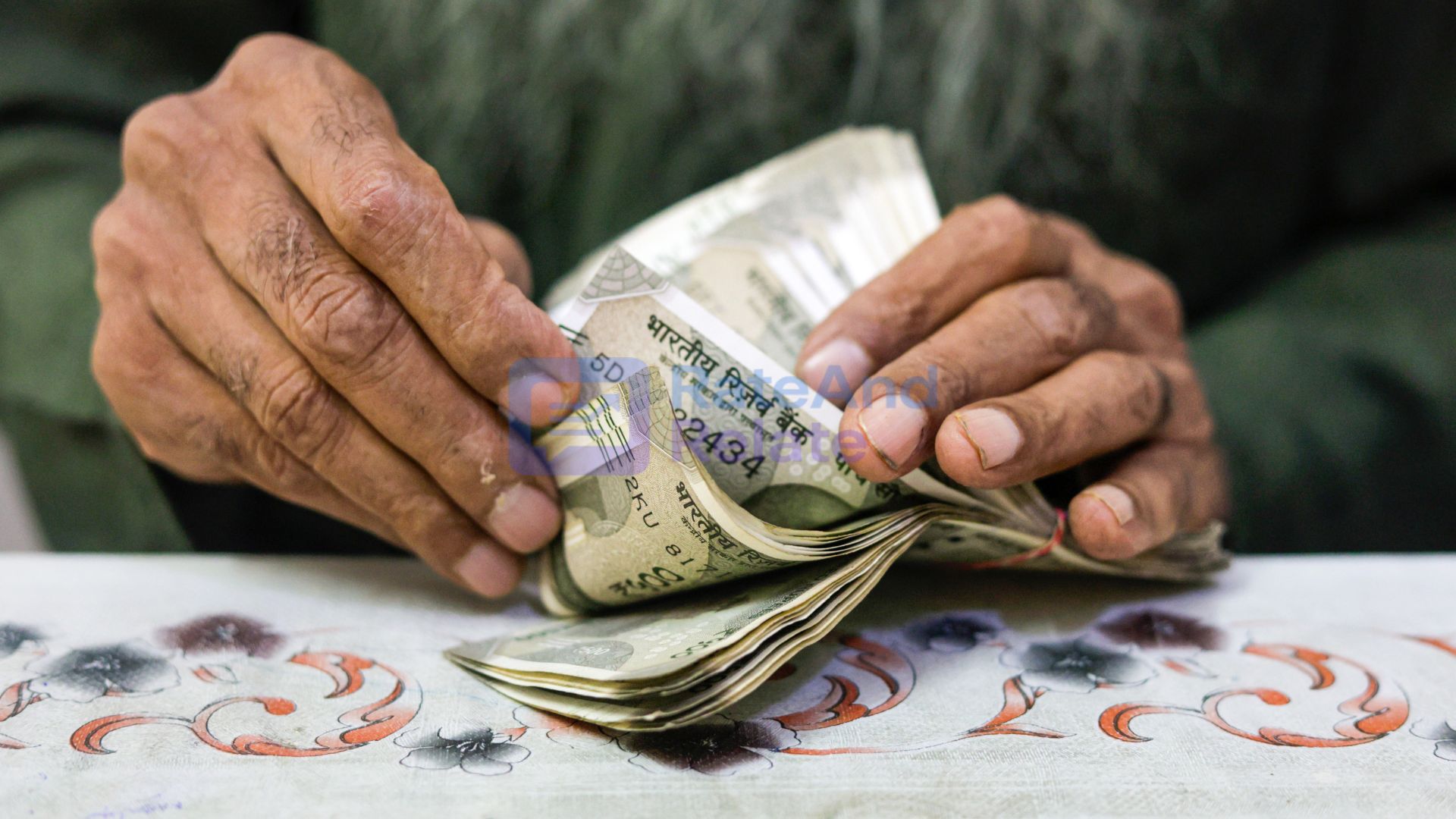

The exchange rate between the Indian Rupee (INR) and the US Dollar (USD) is easily one of the most important indicators of our economic position in the global market. Whether you are paying for an overseas AWS server to host a new web project or checking the price of USDT before making a trade, this exchange rate directly impacts our daily digital and physical lives.
In 2026, the rupee has weakened to near-record levels. In my opinion, what most people see as just a number on a news ticker is actually a complex mix of global pressures and our own domestic realities. However, understanding the real facts and figures behind this movement is the only way to prepare your budget for the road ahead.
Here is my expert breakdown of exactly what is happening with our currency right now!
The Current Trend: A Look at the Numbers
As of March 2026, the Indian Rupee is trading heavily around ₹93–₹94 per US Dollar, compared to just ₹89–₹90 back in January. That is a depreciation of nearly 4–5% in just a few short months!
Actually, when you zoom out and look at the long-term trend, the picture becomes even clearer:
- 2010: ~₹45 per USD
- 2020: ~₹75 per USD
- 2026: ~₹94 per USD
This clearly indicates a gradual, consistent weakening of the rupee over time.
The Hidden Forces Dragging the Rupee Down
So, why is this happening? In my view, it boils down to a few massive economic realities:
- Heavy Oil Dependence
India imports nearly 85–90% of its crude oil. When global oil prices rise due to Middle East tensions, we need significantly more dollars to pay our import bills. This spikes the demand for USD and weakens the rupee.
- Foreign Investment Outflows
Early this year, Foreign Institutional Investors (FIIs) pulled roughly $8–10 billion out of Indian markets. Actually, this massive withdrawal drastically reduces the supply of dollars in our economy.
- The Unstoppable US Dollar
The US Dollar Index has remained incredibly strong. Higher interest rates in America attract global investors, sucking capital away from emerging markets like ours.
- The Trade Deficit
We consistently run a trade deficit of around $20–25 billion per month. Because we import more than we export, our demand for dollars remains structurally high.
The RBI’s High-Stakes Balancing Act
However, the Reserve Bank of India (RBI) is not just sitting back and watching this happen.
India currently holds massive foreign exchange reserves of around $640–650 billion. During sharp drops, the RBI actively steps in to sell dollars in the open market. Actually, this strategic intervention recently helped the rupee recover slightly from ₹94.8 back down to ₹93.5. In my opinion, without the RBI managing this volatility, we would be seeing much more extreme, panic-inducing fluctuations.
The Real Impact on Our Economy
A weaker rupee is a double-edged sword.
On the negative side, it instantly increases the cost of crucial imports like crude oil, server hardware, and electronics. This leads directly to higher fuel prices and creeping inflation. Actually, even a tiny depreciation of ₹5 against the dollar can significantly raise your household and business expenses.
However, it isn’t entirely bad news! A weaker rupee makes Indian exports much more competitive globally. Massive sectors like IT services—which earn 70–80% of their revenue in US Dollars—see a massive boost in their profit margins. Additionally, the $120+ billion in remittances sent home to India by overseas workers suddenly becomes much more valuable.
Final Thoughts & Future Outlook
Experts suggest that the rupee is likely to remain highly volatile in the near term, hovering in the ₹92–₹97 range. If global oil prices spike further, we could even see it push toward the ₹100 mark.
The depreciation of the rupee is not some sudden, mysterious phenomenon; it is the natural result of our high import dependence and global dollar strength. However, while it absolutely creates challenges with inflation, it also offers unique advantages for our export-driven tech sectors. Managing this delicate balance will be the ultimate key to our long-term economic stability!