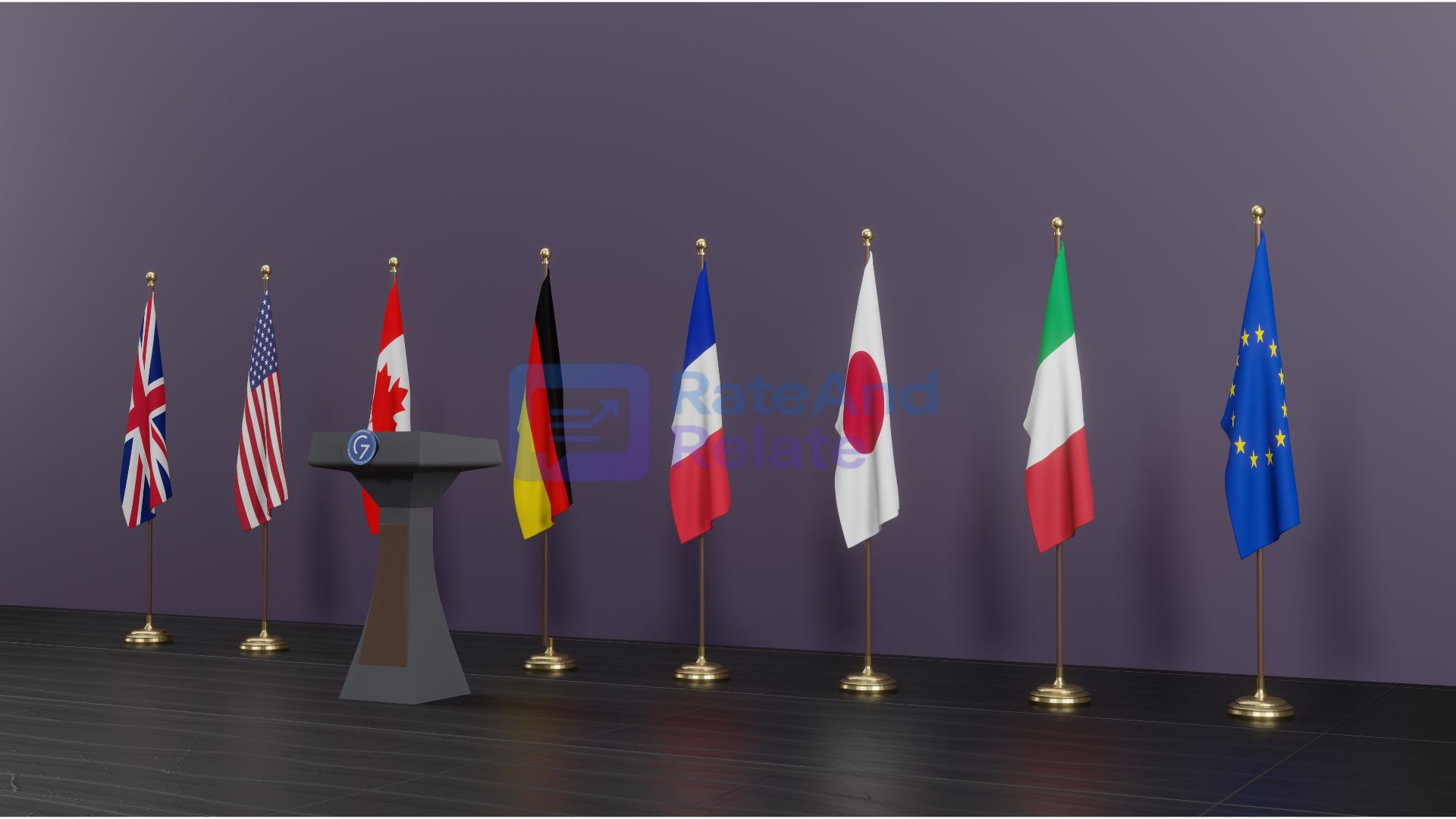

The freshly concluded G7 Summit 2026 in Évian, France, has officially drawn to a close, and it has made one trend glaringly obvious to the international community: India’s strategic footprint in global decision-making is accelerating at an unprecedented rate.
Although India is not a formal member of the Group of Seven, its participation as a key guest nation has shifted from a polite diplomatic gesture to an absolute operational necessity. When I look at the shifting corridors of international trade and supply chain diversification, the reality is clear. As the world’s fastest-growing major economy, a dominant digital technology hub, and the primary voice anchoring the Global South, India’s presence in Évian wasn’t just casual; it was foundational to the entire agenda.
In my opinion, the developed world is finally waking up to the fact that you cannot solve global economic resilience, AI governance, or mineral security challenges without having India directly at the table. Here is my breakdown of what actually went down at the summit and what it means for the future.
Global Trade: The Preferred Supply Chain Alternative
One of the defining themes heavily championed by host nation France at this year’s summit was the urgent need to reduce excessive macroeconomic imbalances and secure vulnerable global value chains.
Actually, the geopolitical landscape has forced multinational corporations to aggressively hunt for reliable alternatives to over-concentrated manufacturing hubs. India’s proactive domestic policies, aggressive infrastructure scaling, and massive tech-savvy workforce make it the ultimate landing zone for foreign direct investment.
However, moving production lines isn’t just about cheap labor anymore; it requires an ecosystem capable of handling high-tech manufacturing. The commitments emerging from the G7 indicate that we are about to see a massive wave of capital injected directly into India’s core industrial sectors:
- High-end electronics manufacturing and assembly tracks.
- Localized semiconductor fabrication and microchip production plants.
- Next-generation renewable energy storage solutions and EV supply chains.
- Advanced industrial processing networks.
Technology Cooperation and the AI Frontier Takes Center Stage
Artificial intelligence, cybersecurity framework alignment, and digital public infrastructure (DPI) were absolute priorities during the three-day summit in Évian.
India’s massive domestic digital transformation—built on open-source digital identity and instant unified payments systems—has completely captured global attention. In my opinion, India has proven to the world how scalable technology can drive massive economic inclusion with absolute efficiency.
At the summit, the tech dialogue focused on three critical layers:
- Responsible AI Architecture: India’s rapidly growing AI developer ecosystem makes it a crucial partner in establishing global, ethical guardrails for machine learning deployment without choking out fast-paced innovation.
- Hardened Cybersecurity Frameworks: As international digital economies become deeply intertwined, securing critical national infrastructure requires tight, cross-border intelligence sharing.
- Exporting Digital Public Infrastructure: Developed nations are actively studying India’s tech stack as a blueprint to help emerging economies build friction-free financial and governance platforms.
The Battle for Critical Minerals and Energy Security
If you want to know where the real strategic tension lies, look directly at the summit’s intense focus on critical mineral value chains. The global clean energy transition has triggered an absolute sprint to secure stable supplies of lithium, cobalt, nickel, and rare earth elements.
Actually, a very limited number of global players currently hold a near-monopoly over the extraction and refining of these vital resources. In my opinion, India’s strategic alliances with G7 nations to diversify these mining and processing networks are a brilliant geopolitical move. This cooperation doesn’t just protect India’s domestic electric vehicle and solar ambitions—it helps insulate the global technology sector from sudden, hostile export restrictions.
A Masterclass in Diplomatic Balancing
Beyond the trade figures and technology panels, India’s expanding diplomatic weight was completely undeniable throughout the G7 proceedings.
However, what makes India’s position truly unique is its ability to operate as a critical bridge. It has successfully positioned itself as a reliable mediator that can advocate fiercely for the interests of developing countries while simultaneously maintaining exceptional, deep-rooted ties with major Western powers.
The Road Ahead
In my opinion, the G7 Summit 2026 has sent an incredibly loud, unmistakable signal to global investors, technical developers, and institutional policymakers alike. India can no longer be evaluated through the outdated lens of an emerging market or a simple destination for low-cost software outsourcing.
Actually, the challenges ahead—ranging from rapid infrastructure modernization to navigating complex regulatory reforms—will require incredibly sharp, deliberate policy decisions. However, the sheer momentum of India’s economic and tech trajectories means it is uniquely positioned to handle the pressure. If you are tracking the absolute future of global governance, trade resilience, and technological innovation, all roads run directly through India!