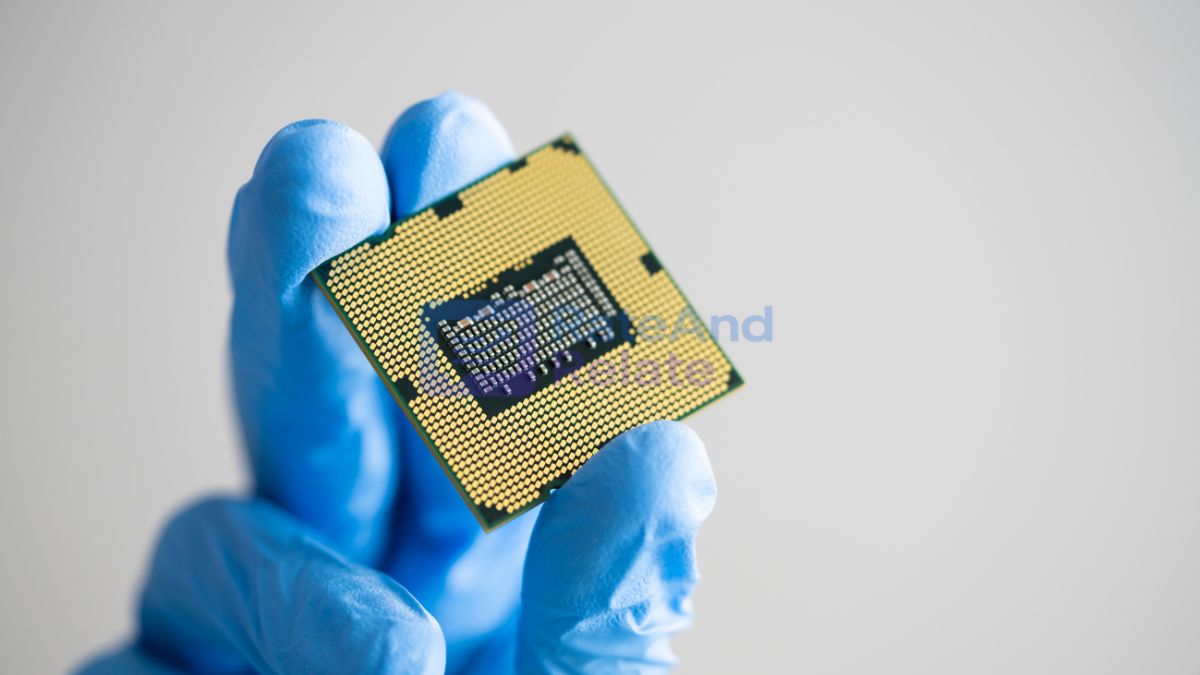

India’s ambition to become a global semiconductor powerhouse is rapidly gaining momentum, and right now, Gujarat is emerging at the absolute center of this transformation. In my opinion, with massive investments, dedicated industrial infrastructure, global partnerships, and proactive government policies, the state is perfectly positioning itself as India’s primary gateway for tech manufacturing.
As countries worldwide urgently attempt to reduce their dependence on highly limited, concentrated chip supply chains, India clearly sees semiconductors as a strategic sector essential for our future. From defense and AI to automotive manufacturing and renewable energy, chips are the new oil. Gujarat’s industrial ecosystem, seamless connectivity, and investor-friendly environment are now actively attracting some of the world’s biggest projects. Here is my breakdown of how it is happening!
Gujarat’s Massive Semiconductor Momentum
Actually, the biggest driver behind Gujarat’s rapid rise is the sheer, unprecedented scale of investments flowing into the state.
One of the absolute most significant developments is the massive ₹91,000 crore semiconductor fabrication plant currently being developed by Tata Electronics in Dholera. This massive project represents India’s very first major chip fabrication initiative and is heavily expected to create thousands of highly skilled jobs while firmly strengthening our domestic capabilities.
Furthermore, the Government of India has officially approved a dedicated 66-hectare Special Economic Zone (SEZ) for semiconductor manufacturing right in Dholera. Add to that the recent inauguration of Micron Technology’s advanced assembly and testing facility in Sanand—which will feature one of the world’s largest cleanroom spaces—and it is clear Gujarat’s ecosystem is taking shape fast.
Why Gujarat Actually Has the Advantage
Gujarat offers several massive, undeniable advantages that make it highly attractive for global semiconductor companies.
- Strong Industrial Infrastructure: When I look at the state’s mature industrial base, it is impressive. Supported by major ports, highways, freight corridors, and reliable power infrastructure, the foundation is rock solid. The Dholera Special Investment Region (SIR) is being built from the ground up as a futuristic smart city specifically designed for advanced manufacturing.
- Policy Support and Faster Approvals: Both the state and central governments are aggressively supporting these investments. Recent policy changes drastically reducing land requirements for electronics SEZs have accelerated project timelines.
In my opinion, infrastructure readiness and fast-tracked government approvals are exactly why global industry leaders at events like Gujarat SemiConnect 2026 consistently choose Gujarat over competing regions.
Building a Complete, Self-Sustaining Ecosystem
However, modern semiconductor manufacturing requires so much more than just building massive chip plants. It heavily depends on a vast network of raw material suppliers, flawless logistics, ultra-pure water systems, deep research centers, and highly skilled talent.
Gujarat is actively developing this full ecosystem. Beyond Tata and Micron, exciting new semiconductor packaging and display manufacturing projects have recently been approved in Dholera and Surat—including India’s first commercial Mini/Micro-LED display facility.
To fuel this, the state is heavily focusing on workforce development. Top institutions like NIELIT, CDAC, IIT Gandhinagar, and SP Ahmedabad are actively collaborating on deep VLSI research and semiconductor training programs to create a long-term, highly skilled talent pipeline.
The Strategic Importance for India
India currently imports a massive portion of its daily semiconductor requirements. As recent global supply chain disruptions brutally exposed the risks of this import dependence, domestic chip manufacturing instantly became a top national priority.
Gujarat’s rapid emergence as a semiconductor hub perfectly supports India’s broader “Make in India” and “Atmanirbhar Bharat” initiatives. Actually, global companies are desperately looking to diversify their manufacturing away from concentrated production centers in East Asia, and Gujarat offers the perfect alternative: stable policies, strong infrastructure, and available labor.
The Real Challenges Ahead
However, despite this incredibly rapid progress, serious challenges remain. Semiconductor manufacturing is easily one of the world’s most highly complex industries, requiring extreme precision infrastructure and uninterrupted utilities.
In my opinion, one of the biggest hurdles is building the necessary social infrastructure. Areas like Dholera and Sanand desperately need better housing, international schools, modern hospitals, and premium urban services to successfully attract and retain top-tier global talent. There have also been massive engineering challenges linked to the tough land conditions in Dholera, though development pushes forward.
Conclusion
Gujarat’s semiconductor ambitions are absolutely no longer just flashy policy announcements on paper. Massive, large-scale projects are actively under construction, and international partnerships are expanding daily.
If this incredible current momentum continues, Gujarat will undeniably become the absolute foundation of India’s semiconductor manufacturing ecosystem over the next decade. Actually, for India, Gujarat’s semiconductor rise is so much more than just a local industrial success story—it represents a massive, historic step toward true technological self-reliance and global competitiveness!