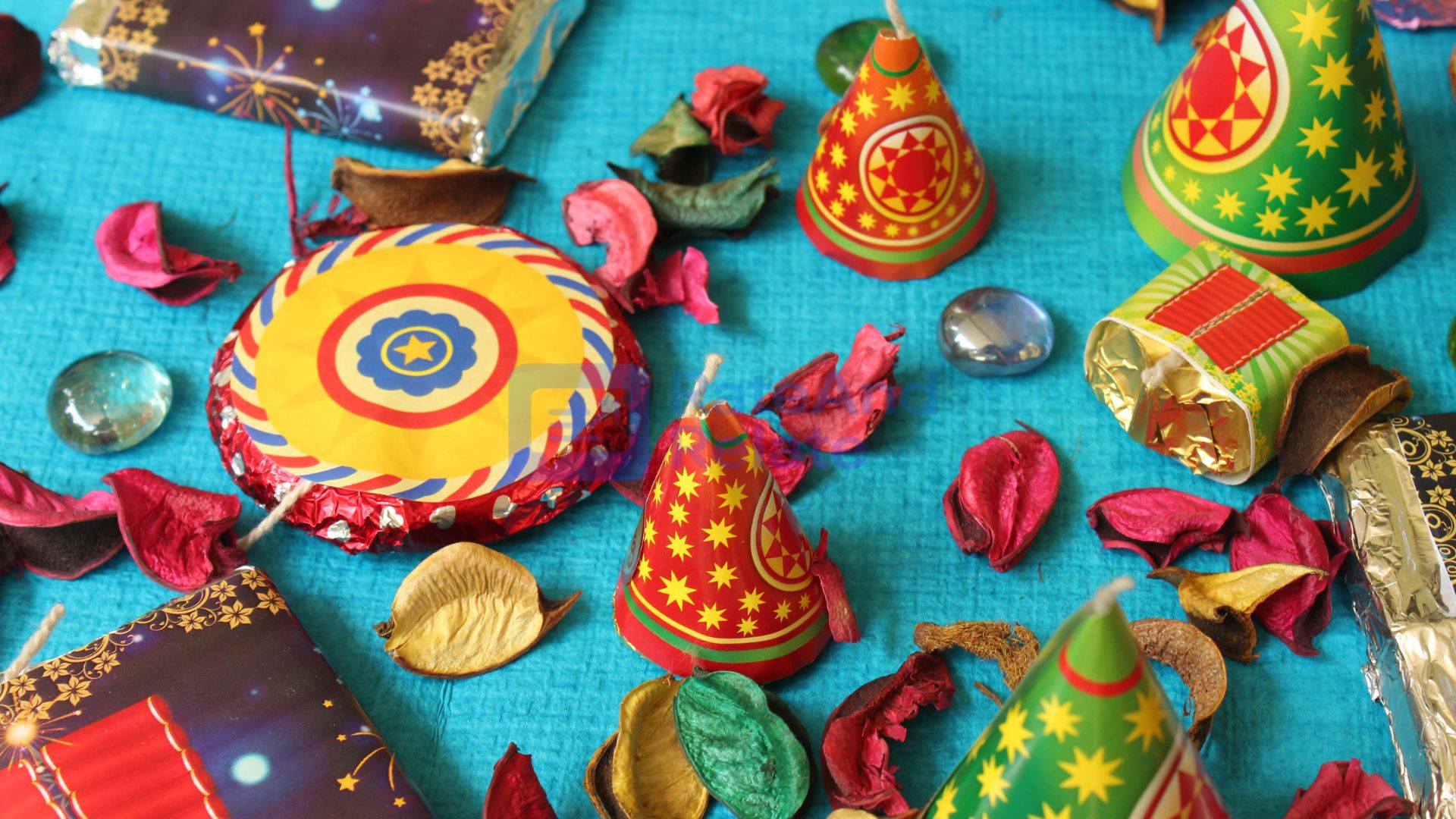
Few cultural spectacles on earth match the sensory energy of festive celebrations in India. Across Diwali and regional celebrations, night skies ignite with vibrant bursts of color, clay lamps line every windowsill, and the collective celebration brings families and neighborhoods together. In my opinion, arguing that traditions should be wiped away without offering viable, culturally respectful alternatives is a tone-deaf approach to environmental advocacy that alienates the very people it attempts to persuade.
Actually, traditional fireworks have extracted an increasingly devastating toll on our shared air quality, converting autumn celebrations into public health emergencies marked by severe respiratory distress, dense post-festival smog, and dangerous spikes in PM2.5 particulate matter. Enter the concept of “green crackers”—formulations developed by scientific institutions like the CSIR-National Environmental Engineering Research Institute (NEERI) to preserve the visual spectacle of celebration while dampening its toxic fallout. However, branding fireworks as “green” creates a dangerously misleading psychological loophole: assuming that a less-polluting combustion device is entirely harmless.
When I analyze the chemical realities, enforcement blindspots, and airshed dynamics surrounding festive fireworks, the takeaway is clear: green crackers represent a meaningful scientific stride, but treating them as an open license for unrestricted bursting ignores basic atmospheric physics.
The Chemistry Myth: What SWAS, STAR, and SAFAL Actually Accomplish
The label “green cracker” frequently misleads consumers into picturing zero-emission sparklers or biodegradable pyrotechnics.
The real-world scientific breakthrough achieved by Indian research labs is about risk mitigation and heavy metal reduction, not zero emissions:
- SWAS (Safe Water Releaser): These crackers eliminate potassium nitrate and sulfur, utilizing an innovative chemical formulation that releases water vapor upon detonation to actively suppress dust and particulate matter by roughly 30%.
- STAR (Safe Thermite Cracker): Engineered to operate without potassium nitrate or sulfur while eliminating banned chemical binding agents, STAR formulations deliver lower sound thresholds and reduced particulate volume.
- SAFAL (Safe Minimal Aluminium): Conventional crackers use heavy aluminum powder to generate brilliant white flash effects. SAFAL replaces the majority of that aluminum with safer, less persistent chemical oxidizers.
- Banning the Heavy Metal Cocktail: Approved green crackers strictly ban neurotoxic and carcinogenic additives such as barium nitrate, lead, mercury, lithium, and arsenic—compounds that previously settled into topsoil and municipal drinking reservoirs.
In my opinion, developing pyrotechnic formulations that cut particulate generation by 30% and purge hazardous heavy metals is an extraordinary engineering accomplishment. Actually, a 30% reduction on an individual firecracker is meaningless if consumer demand doubles the total volume ignited on festival night. When millions of households burst even “cleaner” crackers simultaneously within stagnant winter meteorological conditions, the cumulative pollution load easily overwhelms the local airshed.
The Greenwashing Minefield: Sivakasi Realities vs. Counterfeit Retail
The primary breakdown in the green cracker experiment does not occur in scientific laboratories; it occurs at roadside stalls and informal neighborhood bazaars.
The supply chain faces severe structural friction:
- The Counterfeit QR Code Industry: Legitimate green crackers must carry verifiable CSIR-NEERI green logos and tamper-evident QR codes that allow consumers to scan and verify the specific testing batch. In reality, unscrupulous counterfeiters routinely print counterfeit green labels and slap them onto banned conventional stock.
- The Transition Barrier for MSME Manufacturers: While major industrial manufacturers in Sivakasi invested the capital required to retool mixing rooms and license patented formulas, thousands of informal cottage-scale units operate on razor-thin cash reserves and struggle to source approved raw materials.
- Retail Enforcement Gaps: Expecting local municipal teams and police constables to verify chemical composition at thousands of temporary seasonal fireworks stalls is an impossible operational challenge.
However, blaming local artisans and factory workers ignores their economic reality. Fireworks manufacturing sustains hundreds of thousands of livelihoods in southern Tamil Nadu. A viable transition must support manufacturers with affordable raw-material pipelines rather than subjecting the industry to unpredictable seasonal bans.
Evaluating the Green Cracker Transition
Grading whether green crackers solve festive air pollution requires separating chemical intent from ground-level atmospheric execution:
- Heavy Metal & Barium Elimination Removing barium nitrate, arsenic, and mercury from retail formulations drastically reduces long-term heavy metal toxicity in urban soil and runoff water. In my opinion, this is the single greatest environmental victory of the green cracker initiative.
- Airshed Impact Under Thermal Inversion During late autumn across northern and central India, cool descending air creates a meteorological ceiling that traps smoke close to ground level. Actually, even reduced-emission crackers worsen hazardous air quality when trapped under a temperature inversion.
- Supply-Chain Verification & Anti-Counterfeit Policing The market remains saturated with uncertified and mislabeled crackers. Without automated scanning at wholesale distribution points, consumers have no reliable way to verify what they are buying.
- Cultural Continuity & Behavioral Compromise Green crackers offer a pragmatic middle ground between an outright cultural ban and unregulated environmental harm, allowing families to celebrate responsibly while acknowledging public health imperatives.
Beyond Combustion: Modernizing Community Celebrations
Environmental consciousness during festive seasons does not require abandoning cultural heritage. It calls for evolving past individual, backyard smoke traps into modern, shared community celebrations:
- Centralized Community Laser and Drone Shows: Municipalities and residential welfare associations can replace thousands of individual pyrotechnic bursts with coordinated drone light displays and synchronized laser projections, delivering grand visual spectacles with zero smoke.
- Strict Designated Bursting Windows: Restricting fireworks activity to pre-designated community parks during narrow, coordinated time windows prevents smoke from accumulating directly inside residential street corridors and apartment complexes.
- Returning to Earthen and LED Lighting: Re-centering Diwali celebrations around handmade terracotta oil lamps (diyas) and energy-efficient LED installations honors traditional roots while supporting local potters and artisans.
- Zero-Waste Packaging Mandates: Fireworks packaging generates mountains of non-biodegradable plastic wrapping, metallic films, and toxic sulfur ash. State pollution control boards should require fully recyclable, unbleached cardboard packaging across all licensed brands.
Final Thoughts
The debate over green crackers is not a battle between cultural tradition and environmental responsibility; it is an urgent test of whether we can modernize our heritage to protect the vulnerable.
In my opinion, assuming that a green label gives anyone free license to fill an entire neighborhood with smoke for hours on end is an exercise in cognitive dissonance. A 30% cleaner firecracker still produces smoke, noise, and ash. However, demonizing families who wish to light sparklers with their children ignores the profound human desire for shared celebration and joyous tradition. Actually, true cultural maturity lies in finding harmony between reverence for our past and care for our collective future. By supporting authentic certified manufacturers, embracing community light displays, and exercising personal restraint, we can preserve the spirit of our festivals while ensuring the air our children breathe the next morning remains clean, healthy, and safe!