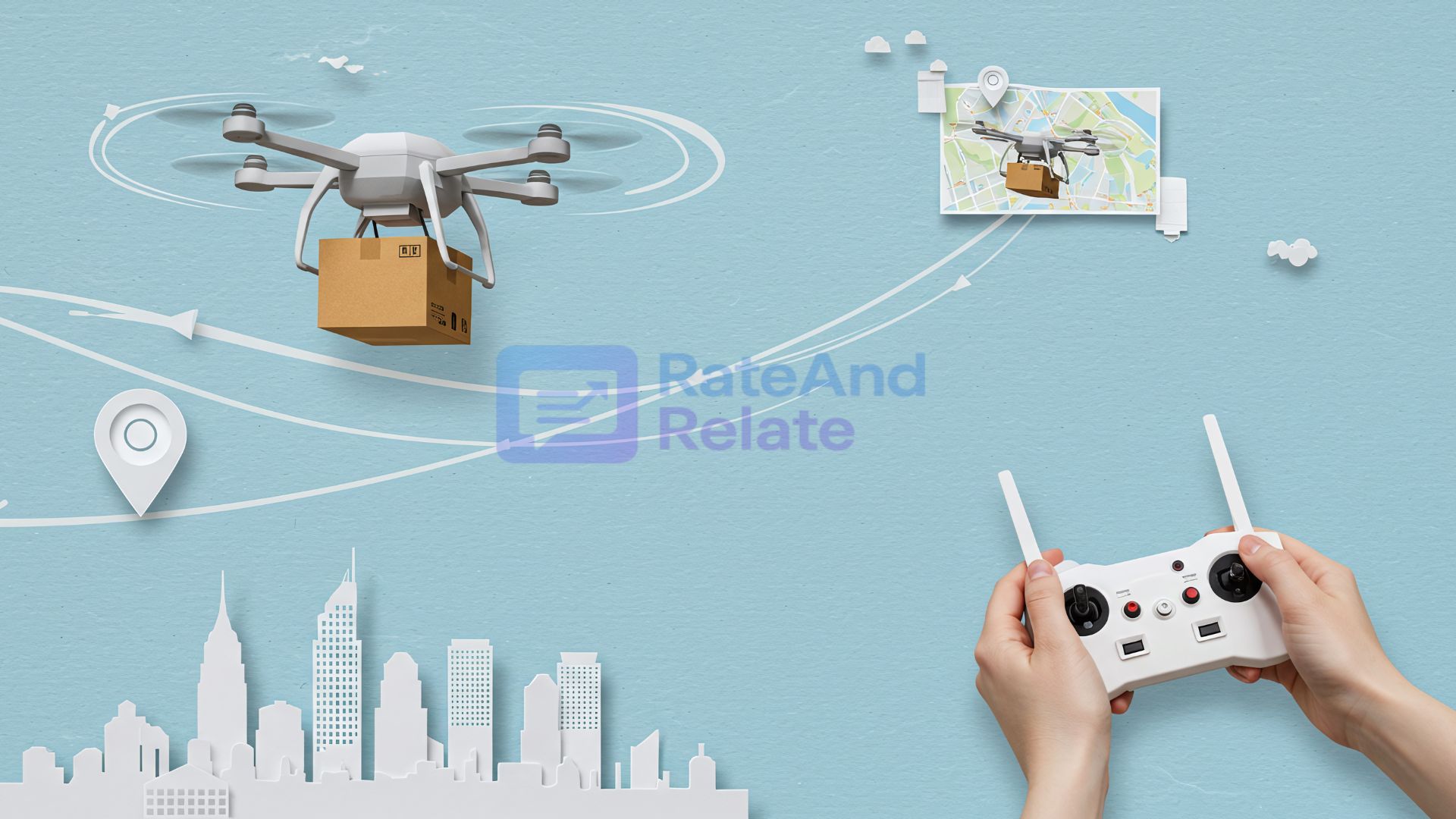

For years, drone delivery lived in the realm of futuristic imagination—an exciting idea showcased in tech showcases but far from practical reality. Today, that future is taking off faster than expected. What was once a niche experiment has evolved into one of the most promising solutions for the world’s biggest logistics bottleneck: last-mile delivery.
Scaling drone delivery is no longer about simply flying a device from point A to point B. It requires building a sophisticated aerial logistics network capable of handling thousands of autonomous flights every day. Behind each mission lies a system powered by real-time navigation, automated air-traffic coordination, advanced weather modelling, and high-efficiency battery technology. These elements work together to ensure drones operate not as gadgets, but as dependable industrial tools.
Key technological enablers include:
- Autonomous navigation systems that maintain precision even in dense urban or remote environments.
- Cloud-based command centers capable of supervising thousands of simultaneous flights.
- Obstacle and collision-avoidance sensors that ensure safety at scale.
- Battery and charging infrastructure that supports high-frequency deliveries.
Across the world, this shift is accelerating. The United States and Japan are expanding regulations that allow autonomous flights beyond the visual line of sight. Rwanda has created one of the world’s most successful medical drone delivery systems. India is emerging as a major drone market with government-backed corridors, healthcare pilots, and increasing investments in drone manufacturing. These advances signal that global policy, infrastructure, and innovation are aligning in favor of large-scale aerial logistics.
Countries leading drone adoption include:
- Rwanda: Pioneering medical supply delivery.
- United States: Strong regulatory and commercial testing environment.
- India: Rapidly expanding drone corridors and startup ecosystem.
- Japan: Advanced robotics and autonomous flight approvals.
The economic case for drone delivery at scale is compelling. By avoiding road congestion and flying direct routes, drones significantly lower delivery times and energy consumption. They make hyperlocal delivery more efficient and reduce the need for large ground fleets. In remote or disaster-struck regions, drones provide access faster than any vehicle, strengthening healthcare, emergency response, and essential supply distribution.
Benefits at scale include:
- Faster delivery with lower energy use.
- Expanded service areas without increasing delivery fleets.
- Reliable access to difficult or remote locations.
- Reduced operational costs over time.
Ultimately, the promise of drone delivery lies in its ability to create a new logistics layer—an intelligent aerial network operating above the constraints of traditional infrastructure. As technology evolves and regulations stabilize, drone delivery will shift from emerging innovation to mainstream logistics capability.
Drone delivery at scale is no longer a distant possibility. It is the next major step in global commerce—and the businesses preparing today will lead the logistical landscape of tomorrow.