
A New World Order in Trade
For three decades, globalization defined the rhythm of the world economy. Goods, services, and data moved freely across borders. Companies sought efficiency, not ideology. The cheapest supply chain was the best one — regardless of where it was.
But in 2025, that era of “borderless capitalism” is rapidly fading. The new buzzword shaping global trade today is “friend-shoring.”
The concept marks a historic shift — from open globalization to selective globalization — where countries and corporations prefer to trade and invest within trusted political and strategic allies rather than relying purely on cost efficiency.
What Is Friend-Shoring?
Friend-shoring, also known as ally-shoring, refers to the practice of relocating supply chains and production networks to nations that share similar political values, economic systems, or strategic interests.
It’s about reducing dependence on “rival” or “unreliable” nations and securing supply routes that won’t collapse in a crisis — whether it’s a pandemic, war, or trade sanction.
For example:
- The United States is moving semiconductor manufacturing from East Asia to Mexico, India, and Vietnam.
- The European Union is sourcing critical minerals from Africa and Latin America instead of China.
- India is becoming a major hub for companies seeking an alternative to China, backed by geopolitical alignment and manufacturing incentives.
Why the Shift Happened
1. COVID-19 Supply Chain Shock
The pandemic exposed how overreliance on a single manufacturing hub (especially China) could cripple global production — from pharmaceuticals to electronics.
2. US-China Strategic Rivalry
Rising geopolitical tension turned economic interdependence into a vulnerability. Washington and Beijing’s competition over technology, chips, and data has forced nations to “choose sides.”
3. Russia-Ukraine War
Europe’s dependence on Russian gas highlighted the dangers of linking national security to hostile trade partners — a wake-up call for energy diversification.
4. National Security & Economic Resilience
Governments now view supply chains as part of national defense. The U.S. CHIPS Act and India’s Production Linked Incentive (PLI) schemes are direct responses to this new security-driven globalization.
The New Trade Map
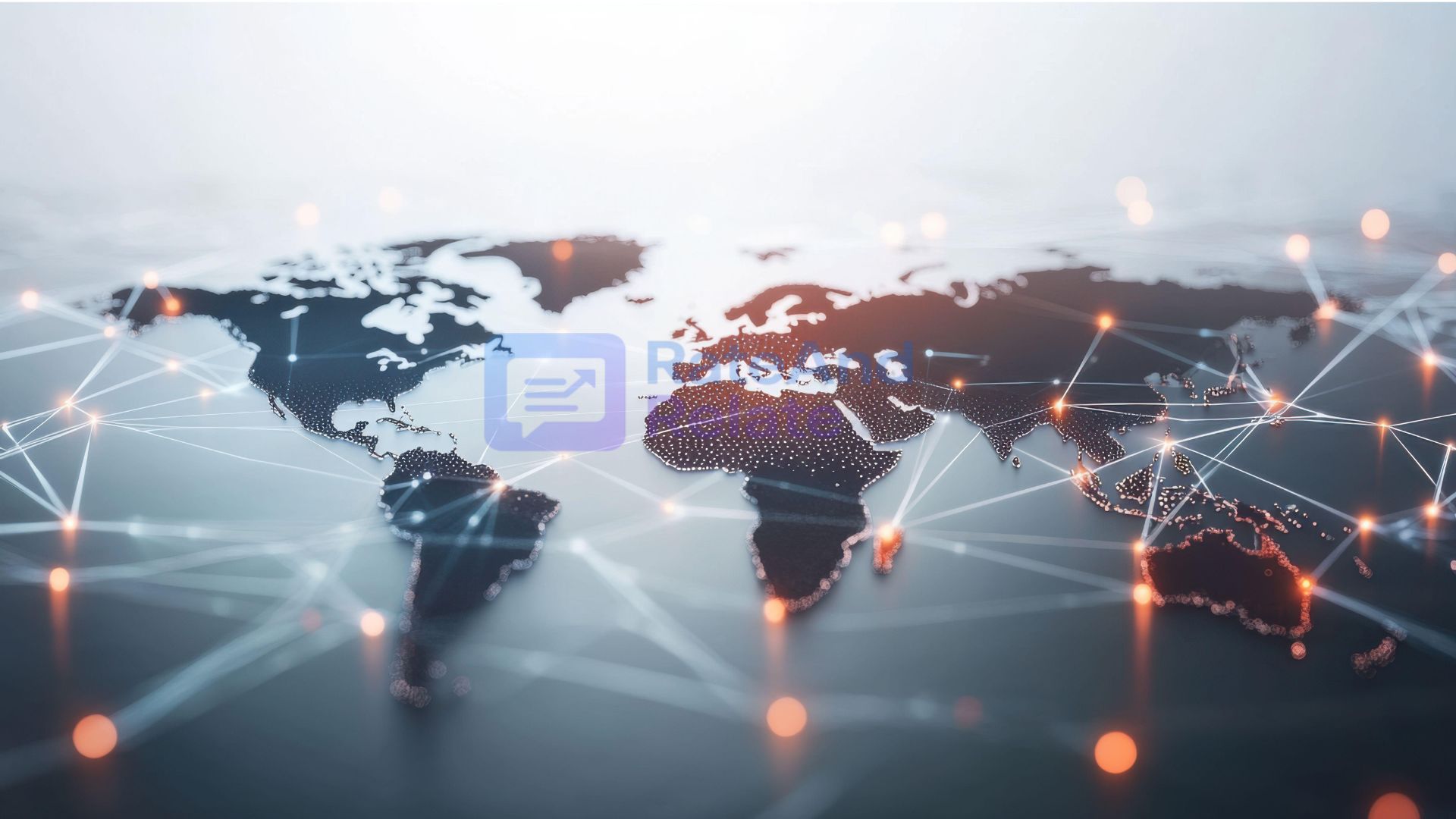
The rise of friend-shoring is redrawing global economic networks:
- Asia’s Power Shift: India, Vietnam, Indonesia, and Malaysia are emerging as alternative manufacturing bases.
- North America’s Regionalization: The U.S., Canada, and Mexico are forming tighter regional supply chains (known as “near-shoring”).
- Europe’s Diversification: The EU is strengthening trade with Africa and Latin America for critical minerals, renewable energy, and food security.
The new motto is: “Trade with trust.”
Winners and Losers
Winners
- India & Southeast Asia: Attracting investment from global firms seeking China alternatives.
- Mexico: Benefiting from U.S. near-shoring in manufacturing and automotive sectors.
- Allied Democracies: Nations that align politically with Western economies gain long-term partnerships and technology transfers.
Losers
- China: Facing gradual decoupling in technology and manufacturing sectors.
- Small Export-Dependent Economies: Countries outside major alliances risk marginalization.
- Global Consumers: Costs may rise as companies prioritize security over cheap production.
Implications for Businesses
- Resilient Supply Chains: Firms are balancing cost with security — creating redundancy instead of single-source dependence.
- Rise of “Geo-Economics”: Business decisions now consider diplomacy and defense as much as profit margins.
- Technology Localization: Nations are pushing for local semiconductor, battery, and AI production to protect critical technologies.
- New Trade Blocs: Groupings like the Quad, IPEF, and EU-India trade talks are shaping the next phase of globalization.
Is Globalization Truly Ending?
Not quite. It’s evolving, not vanishing.
The world is moving from “hyper-globalization” to “strategic globalization.”
Instead of efficiency-only trade, the focus is now on trusted trade — a network of “friends” where geopolitics and economics are tightly intertwined.
The 1990s mantra of “Made where it’s cheapest” is being replaced by “Made where it’s safe.”
The next decade will see a world divided into economic clusters — U.S.-led democracies, China-led partners, and a neutral middle ground trying to balance both.
India stands uniquely positioned — friendly with the West, yet maintaining strategic autonomy — making it a crucial player in this new friend-shored global order.
If managed wisely, friend-shoring could lead to a more stable and resilient global economy. But if politicized too deeply, it risks fragmenting trade and increasing inequality among nations.