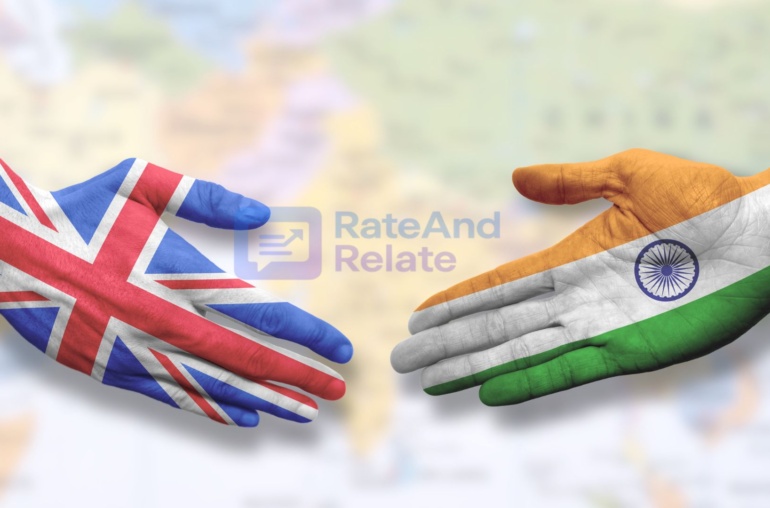

In a world increasingly defined by shifting alliances, economic disruptions, and geopolitical tensions, international diplomacy has become more complex than ever. In my opinion, this era of global uncertainty presents India with unparalleled opportunities, not just challenges. As one of the fastest-growing major economies and a key player in international affairs, India is actively redefining its diplomatic strategy to protect its national interests while anchoring global stability.
A Changing Global Landscape
The traditional world order is undergoing a massive transformation. Power is no longer concentrated in a single region. Actually, the emergence of multiple influential nations has created a highly volatile multipolar system where conflicts, trade tensions, and technological rivalries dictate global dynamics.
Events like the Russia-Ukraine War have severely disrupted energy supplies, global trade, and established security frameworks. Similarly, ongoing tensions between the United States and China have intensified competition across all economic and technological domains. However, in this chaotic environment, countries must carefully balance their relationships—and India is navigating this tightrope with remarkable skill.
India’s Strategic Autonomy
I believe one of the most defining and powerful features of India’s modern diplomacy is its fierce commitment to strategic autonomy. Rather than aligning exclusively with any one bloc, India maintains flexible, pragmatic partnerships based purely on national interest.
Actually, India’s active participation in contrasting groupings like BRICS and the Quad perfectly reflects this balanced approach. While BRICS emphasizes cooperation among emerging global economies, the Quad focuses heavily on ensuring a free and open Indo-Pacific region. This dual engagement allows India to collaborate with highly diverse partners without ever compromising its independence.
Strengthening Regional and Global Ties
India’s diplomatic outreach extends purposefully across multiple regions:
- Neighbourhood First Policy: Focuses on stabilizing and strengthening ties with South Asian countries.
- Act East Policy: Enhances deep economic and strategic engagement with Southeast Asia.
- Indo-Pacific Vision: Firmly positions India as a key maritime power and security provider.
In my opinion, hosting global forums like the 2023 G20 Summit was not just a ceremonial milestone; it was a clear showcase of India’s growing influence on the world stage and its unique ability to bring deeply divided nations to the same table.
Economic Diplomacy: Trade as a Tool
Economic interests are at the absolute core of modern diplomacy. I have watched India actively pursue strategic trade agreements, attract heavy foreign investment, and work to bulletproof global supply chains.
However, initiatives like “Make in India” and “Atmanirbhar Bharat” are about much more than domestic pride—they aim to boost manufacturing while deeply integrating India into global value chains. In a time when multinational companies are restructuring their operations, India is brilliantly positioning itself as a reliable, large-scale alternative.
Technology and Digital Diplomacy
Technology has become a critical, non-negotiable dimension of diplomacy. Issues like data governance, cybersecurity, and artificial intelligence are now at the center of international negotiations.
Actually, India’s leadership in digital public infrastructure—such as massive digital identity systems and instant payment platforms like UPI—has gained immense global recognition. By sharing these proven innovations with other developing countries, India is enhancing its soft power and fostering real, practical international cooperation.
Balancing Security Concerns and Soft Power
Security remains a major concern amidst global uncertainty. India faces real challenges, including border tensions, cross-border terrorism, and maritime security threats. At the same time, India is rapidly modernizing its armed forces and participating in joint defense exercises to ensure stability in the Indo-Pacific.
However, hard power is only half the equation. Beyond politics and economics, India’s cultural diplomacy plays a vital role. Global exports like Yoga, Ayurveda, cinema, and cuisine have massively enhanced India’s global image, building a layer of international goodwill that traditional politics simply cannot buy.
The Way Forward
Despite its growing influence, India faces steep challenges: managing relations with rival major powers, addressing regional security, and ensuring economic resilience in turbulent times.
India’s diplomacy today is defined by flexibility, pragmatism, and a clear long-term vision. In my opinion, by maintaining its strategic autonomy and leveraging both its economic and cultural strengths, India is carving out a highly unique, indispensable position in the new global order. Actually, in uncertain times, smart diplomacy is not just about responding to change—it is about actively shaping the future.