
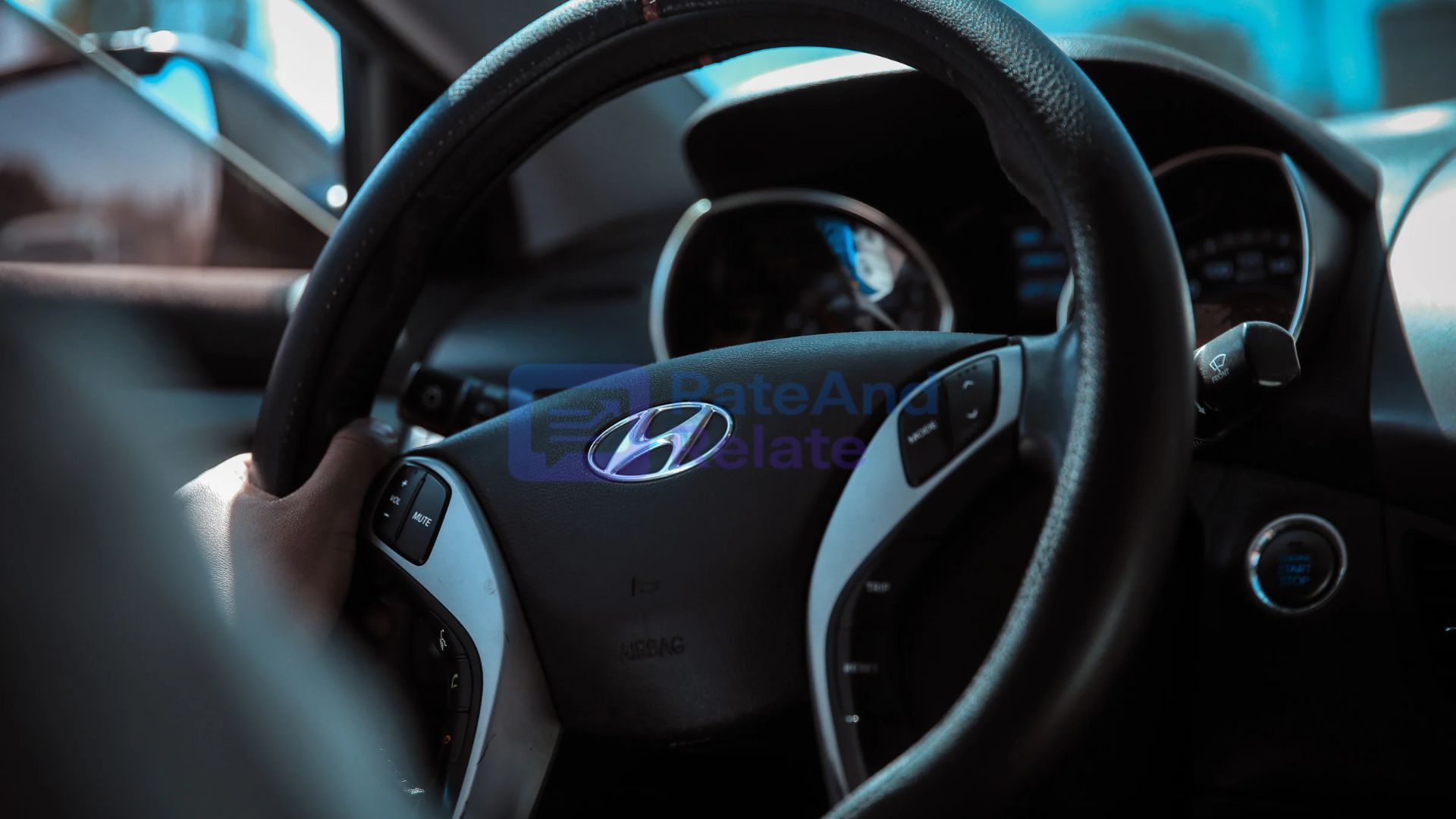
Global manufacturing is witnessing its most consequential realignment in decades.Hyundai Motor Group made international headlines by committing a staggering $15.5 billion investment in India spanning from 2026 through 2032, unveiled following high-level discussions between Executive Chair Euisun Chung and Prime Minister Narendra Modi. Just twenty-four hours later, Hyundai Motor India backed up that grand vision with concrete asphalt and steel: announcing an ₹11,000 crore ($1.16 billion) expansion of its newly inaugurated Talegaon plant in Pune, Maharashtra, to supercharge annual production capacity by nearly 90%.
In my opinion, viewing this colossal capital injection simply as an automaker attempting to sell more SUVs to the Indian middle class completely misreads the geopolitical game board. Actually, Hyundai is executing a structural transformation: turning India from a high-volume consumer sales outpost into a primary global design, engineering, and export engine. However, transforming ambitious investment pledges into sustainable competitive dominance will require navigating complex ground realities—from upgrading small domestic parts suppliers to managing the delicate transition between combustion engines, strong hybrids, and battery electric vehicles.
When I analyze the mechanics behind Hyundai’s seven-year roadmap, the message to global industry is unmistakable: the era of treating India merely as a low-cost assembly hub for foreign-designed cars is officially over.
The Talegaon Blueprint: Expanding Beyond Tamil Nadu
For three decades, Hyundai’s Indian manufacturing heartbeat was anchored almost exclusively in Sriperumbudur, Tamil Nadu. The operational activation of the Talegaon facility in Pune marks a critical geographic and industrial diversification:
- The Capacity Surge: The Pune facility’s installed annual capacity will ramp in phases from 170,000 units up to 320,000 vehicles by 2030.
- The Megawatt Output: Together with its Chennai hub, Hyundai Motor India’s domestic production capacity will climb to nearly 11.4 lakh (1.14 million) units annually by 2030. Factor in sister brand Kia’s plant in Anantapur, and the group’s cumulative Indian footprint will surpass 1.5 million vehicles per year.
- Smart-Factory Architecture: Deploying Hyundai’s “E-FOREST” digital platform integrates artificial intelligence-driven automated quality inspection, augmented reality worker training, and predictive machinery maintenance natively onto the shop floor.
- Powertrain Flexibility: Crucially, Talegaon’s modern assembly lines are engineered to build conventional internal combustion engine (ICE) models alongside hybrid architectures on the same line, allowing the company to pivot based on fluctuating consumer demand.
In my opinion, securing an operational manufacturing base in Maharashtra’s automotive belt provides Hyundai with a massive strategic hedge. Actually, operating dual manufacturing hubs on both the western and eastern industrial corridors dramatically cuts domestic logistics overhead and provides direct access to Mumbai’s deep-water shipping terminals.
The $700 Million R&D Moat: Engineering for Indian Asphalt
The most revealing detail of Hyundai’s $15.5 billion commitment is not the factory floor space—it is the dedicated allocation of approximately $700 million toward expanding Indian research and development, highlighted by a state-of-the-art vehicle testing track.
Historically, multinational car brands treated India as a recipient of hand-me-down vehicle architectures engineered in Europe, Japan, or South Korea. However, foreign platforms frequently struggled with India’s punishing road topography, extreme ambient summer heat, and strict cost expectations.
Actually, putting serious capital into local R&D changes everything:
- Tailored Powertrain Tuning: Calibrating suspension geometry, cooling compressors, and battery thermal management directly against local operating conditions.
- Software-Defined Vehicle Development: Tapping into India’s vast pool of computer science and embedded electronics talent to write localized infotainment software, ADAS algorithms, and connected-car telemetry.
- Academic Collaboration: Hyundai has already established nearly 40 research projects with seven leading Indian academic institutions, developing proprietary battery chemistry, power electronics, and lightweight metallurgy within domestic borders.
When a global titan stops importing blueprints and starts designing platforms locally, it builds an intellectual property moat that foreign rivals cannot easily replicate.
The Export Powerhouse: India as a China-Plus-One Launchpad
Hyundai’s Indian operations recently crossed the milestone of four million cumulative passenger vehicle exports, shipping Made-in-India models to more than 80 countries.
As global supply chains fracture under geopolitical friction and trade tariffs, multinational corporations are desperate for stable, democratic manufacturing bastions. India is increasingly winning that mandate:
- De-Risking Supply Chains: Hyundai is positioning India as a primary export anchor for emerging markets across Southeast Asia, the Middle East, Africa, and Latin America.
- Export Targets: With exports targeted to account for roughly 30% of its total Indian production, expanding domestic capacity is as much about supplying global showrooms as it is about satisfying domestic waiting lists.
- Macro Economic Benefits: Export-driven manufacturing creates hard foreign currency reserves, balances trade deficits, and forces domestic tier-1 component suppliers to conform to strict international safety and emissions tolerances.
Grading Hyundai’s $15.5 Billion Roadmap
Assessing whether this mega-investment will deliver long-term industrial dividends requires separating corporate press statements from structural manufacturing realities:
- Manufacturing Scale & Geographic Footprint
Expanding Talegaon while modernizing Chennai gives Hyundai a combined capacity exceeding 1.14 million units. In my opinion, this scale is essential to maintain cost efficiency and counter aggressive domestic competition from Tata Motors and Mahindra
- R&D Localization & Engineering Autonomy
Committing $700 million to Indian R&D and high-speed test infrastructure represents a genuine transfer of high-value engineering capabilities. It moves the country up the value chain from basic assembly to primary innovation.
- Powertrain Agility: Hybrids, ICE & EVs
Building flexible production lines that can shift dynamically between ICE, hybrid, and electric models shields the business from unpredictable policy shifts and uneven public charging rollouts.
- Tier-2 & Tier-3 MSME Supplier Readiness
Actually, while primary Tier-1 suppliers can match global standards, thousands of smaller domestic MSME suppliers struggle with the capital costs required to upgrade precision machinery, adopt clean energy, and meet zero-defect tolerances.
The Execution Roadblocks: What India Must Fix
Despite the optimism surrounding the announcement, massive investments do not guarantee frictionless industrial execution.
Several persistent operational hurdles must be addressed:
- The Automation vs. Employment Paradox: Modern digital plants like Talegaon lean heavily on robotics, computer vision, and automated transfer presses. Doubling vehicle output no longer doubles shop-floor blue-collar jobs. India must invest heavily in technical polytechnics and mechatronics training so local youth qualify for advanced technician roles.
- Logistics Drag & Port Clearance: Moving finished automobiles and heavy container freight across Indian highways remains more expensive and slower per kilometer than in competing manufacturing hubs across Vietnam or China. Port turnaround times and dedicated freight rail links must continue to accelerate.
- Regulatory Predictability: Automakers are navigating rapid policy interventions—from stricter CAFE-III fleet efficiency targets to evolving GST structures on hybrid powertrains. Long-term seven-year investments demand unwavering regulatory consistency.
Final Thoughts
Hyundai Motor Group’s $15.5 billion commitment is a watershed moment for the Indian industrial landscape.
In my opinion, assuming that foreign corporations invest billions out of goodwill or simple affection for the Indian market is a naive perspective. Global capital moves where long-term returns and structural stability exist. However, viewing this investment merely as more cars rolling off a conveyor belt misses the transformative big picture. Actually, by combining high-output digital manufacturing with deep R&D funding and local supply-chain incubation, Hyundai is validating India’s arrival as a premier global manufacturing powerhouse. The challenge now shifts to domestic policymakers and local industry to match this ambition—proving that India can not only assemble cars for the world, but engineer the future of global mobility!

