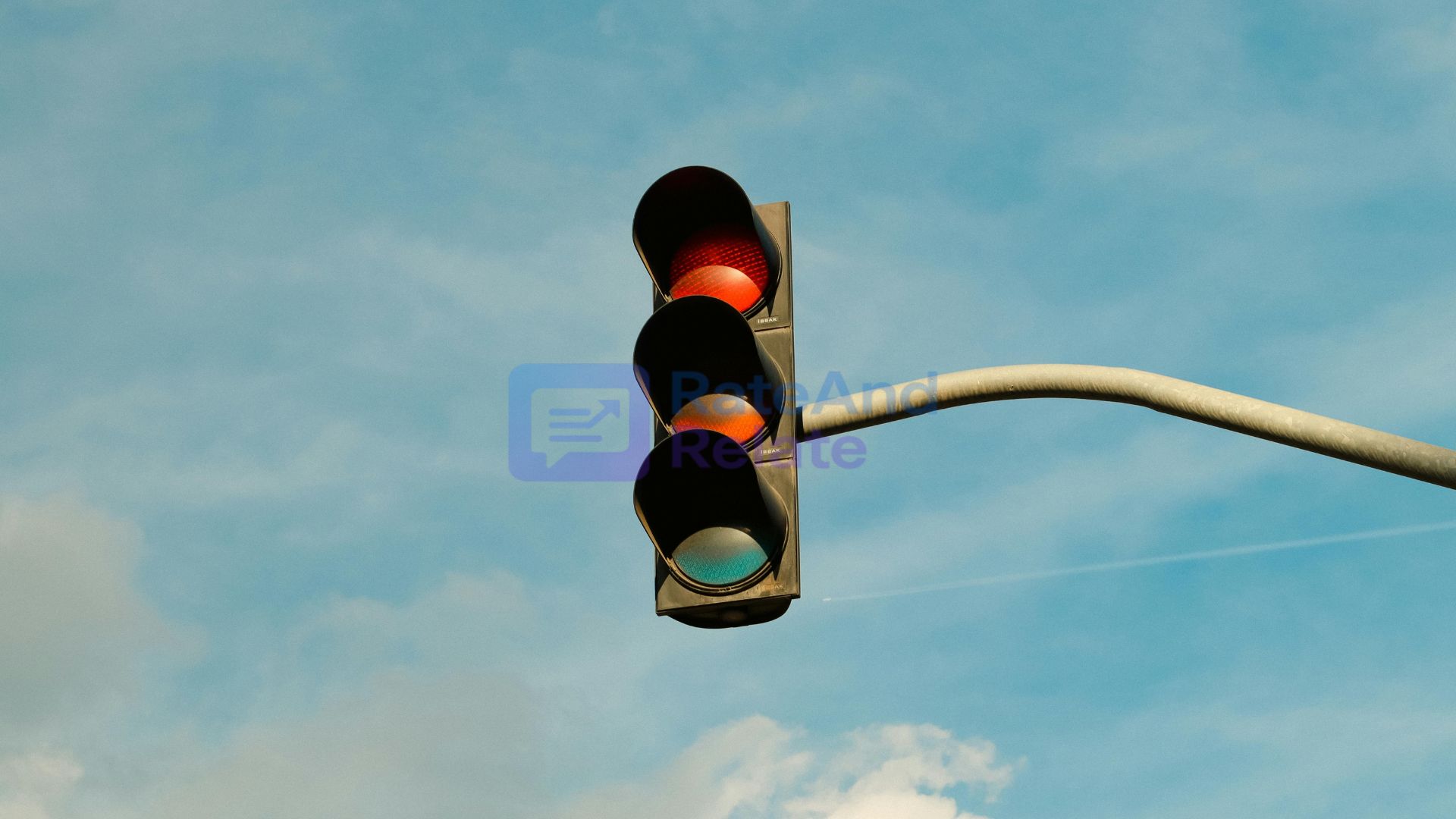
Anyone who has navigated rush-hour traffic in an Indian metro knows the unique frustration of sitting idle at a red light for two minutes while the intersecting lane with the green signal sits completely empty. From congested ring roads to chaotic roundabouts where auto-rickshaws, city buses, delivery bikes, and pedestrians battle for every square inch of tarmac, Indian urban transit has long felt like an unsolvable puzzle.
In my opinion, expecting artificial intelligence algorithms to magically untangle our daily gridlock while ignoring potholed road geometry, illegal parking, and non-existent lane discipline is wishful thinking. Actually, Indian traffic is not a predictable mathematical equation that can be computed inside a clean simulation. However, the aggressive shift toward computer-vision-driven Adaptive Traffic Control Systems (ATCS) is finally tackling one of our biggest urban inefficiencies: the rigid, obsolete timer.
When I look at the pilot projects rolling out across cities like Ahmedabad and Delhi, artificial intelligence isn’t going to turn our streets into orderly European boulevards overnight—but it is finally forcing civic agencies to replace blunt guesswork with real-time urban telemetry.
The Static Signal Trap: Why Fixed Timers Break Indian Roads
Traditional traffic signals operate on fixed, pre-programmed countdowns. City planners set a ninety-second green light for the main artery and thirty seconds for the side street, adjusting the cycle slightly for morning and evening rush hours.
However, real-world Indian traffic rarely follows a timetable:
- A sudden rainstorm, a broken-down commercial truck, a festival procession, or an unannounced pipeline repair can bottle up an entire arterial road within minutes.
- Fixed timers cannot adapt to these sudden volume shifts; they continue cycling blindly, leaving clogged lanes trapped while letting empty cross-streets run green.
- The extreme vehicle heterogeneity—where agile two-wheelers filter between heavy buses and slow three-wheelers—creates fluid flow rates that static timers simply cannot manage.
Actually, the primary objective of an adaptive AI signal is refreshingly practical: eliminate dead time. By utilizing high-definition overhead cameras, induction road loops, and edge AI processors, adaptive systems measure queue lengths and approach speeds in real time, dynamically stretching or cutting green lights to clear vehicle density where it actually exists.
Ground-Level Deployments: Ahmedabad’s Pilot and Delhi’s Mega-Corridor
The transition from academic transport modeling to live street deployment is actively playing out across two contrasting urban environments:
- Ahmedabad’s Tactical 10-Junction Pilot (April 2026):Launched across ten of the city’s most critical arterial intersections, this pilot uses computer vision cameras to evaluate vehicle queue depth and lane occupancy dynamically. Instead of relying on manual traffic wardens to override signals during peak crunches, the local algorithm recalibrates signal phase lengths second-by-second.
- Delhi’s ₹1,789.52 Crore ITMS Overhaul (September 2026):At the macro scale, the capital has approved a massive Intelligent Traffic Management System spanning 42 heavily congested corridors. Beyond dynamic signal synchronization, the platform integrates automated Automatic Number Plate Recognition (ANPR) enforcement, speed violation telemetry, and coordinated emergency vehicle prioritization.
In my opinion, testing adaptive signals at isolated junctions—like Ahmedabad’s 10-junction pilot—delivers immediate local relief, however, the real test lies in corridor-level synchronization. If an AI light accelerates traffic through Junction A only to dump that surging wave directly into an uncalibrated bottleneck at Junction B, you haven’t solved traffic—you have merely moved the queue down the street.
Automated Incident Interception: Clearing Green Corridors for Ambulances
Congestion on Indian highways and ring roads is frequently triggered by minor, unrecorded frictions: a fender bender between two cars, a stalled auto-rickshaw blocking a left turn, or illegal double-parking outside a commercial market.
Integrated incident-detection algorithms address these friction points through automated surveillance:
- Sub-Minute Accident Identification: Deep learning vision models detect stopped vehicles or abnormal braking clusters instantly, alerting city control hubs before a minor scratch cascades into a multi-kilometer backup.
- Dynamic Emergency Routing: When an emergency ambulance or fire tender approaches an ITMS corridor, onboard GPS transponders communicate with the central signal network to cascade green lights sequentially, clearing an uninterrupted corridor through peak traffic.
- Predictive Accident Blackspot Mapping: Aggregating near-miss incident data allows civil engineers to pinpoint dangerous intersection angles, poorly placed dividers, and missing signage before severe collisions occur.
Actually, saving five minutes for an emergency cardiac ambulance caught in rush-hour gridlock justifies an entire municipal ITMS budget, regardless of how many commuter cars it clears.
Evaluating AI Traffic Management in India
Grading the practical feasibility of deploying artificial intelligence onto Indian roads requires balancing technical brilliance against ground realities:
- Real-Time Flow Optimization & Delay Reduction Replacing static mechanical timers with queue-responsive dynamic signals eliminates frustrating “empty road” wait times. In my opinion, this is the lowest-hanging operational win available to municipal corporations.
- Emergency Vehicle Clearance Automating green corridors for emergency services removes the need for frantic manual traffic warden intervention, saving critical lives during golden-hour transit.
- Sensor Resilience Under Harsh Weather & Dust Camera lenses struggle with dense monsoon downpours, winter fog, intense summer glare, and heavy road dust. Without relentless physical maintenance, sophisticated computer vision networks quickly degrade.
- Curing Civic Habits & Civil Engineering Flaws Software cannot widen a bottlenecked road, remove unauthorized street encroachments, or force drivers to respect lane discipline. Expecting an algorithm to fix bad civil engineering is an illusion.
The Hard Boundary: Why Software Cannot Cure Bad Civic Habits
The ultimate limitation of traffic tech in India is that digital algorithms cannot alter physical laws or human behavior.
No neural network can compensate for:
- Encroached Carriage Ways: When vendors, parked vehicles, and construction debris swallow two lanes of a four-lane road, no amount of intelligent signal phasing can restore traffic throughput.
- Disregard for Lane Discipline: Drivers cutting across four lanes to make an abrupt right turn disrupt traffic flow faster than an adaptive controller can compensate.
- Induced Vehicle Demand: Making road transit slightly faster inevitably encourages more commuters to drive private cars rather than take public buses, eventually filling reclaimed road capacity back to gridlock.
In my opinion, AI traffic management must be integrated directly into public transport expansion. If an intelligent transit system prioritizes dedicated city buses, electric feeder shuttles, and safe pedestrian walkways over private single-occupant SUVs, cities can actually reduce the total volume of vehicles competing for road space.
Final Thoughts
Deploying artificial intelligence to monitor and regulate Indian traffic is not a magical fix that will instantly clear our metropolitan avenues.
In my opinion, assuming that installing expensive server racks and camera poles will resolve urban congestion without fixing broken road design and enforcing parking rules is pure administrative theater. However, ditching obsolete countdown timers for real-time adaptive systems provides urban commuters with genuine relief from pointless red-light idling. Actually, the future of Indian mobility won’t be won by technology alone—it will be forged at the intersection of intelligent signal software, robust public transit investment, and basic civic discipline on the asphalt!