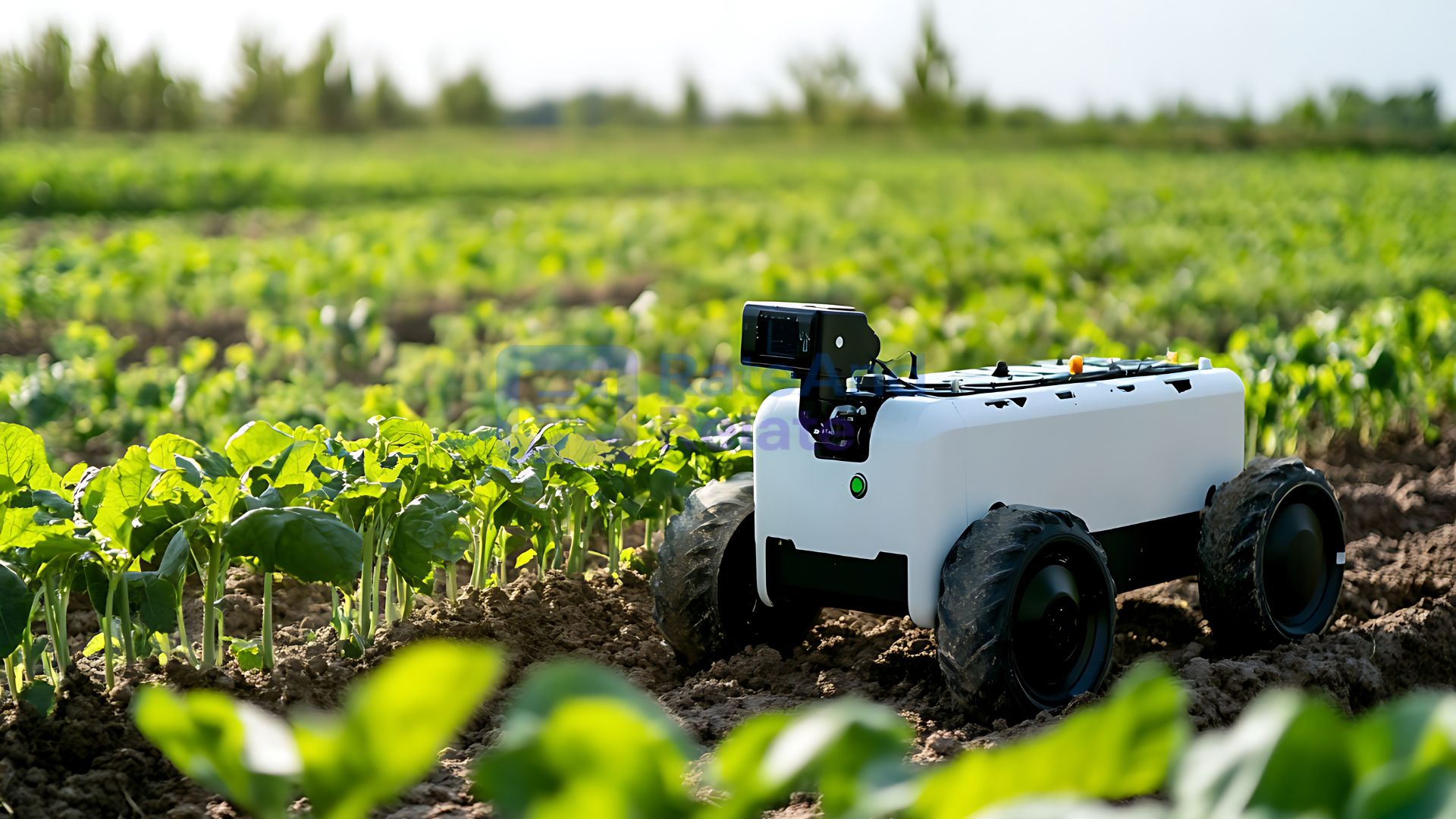

Modern farming is no longer driven by intuition alone — it’s driven by data. At the heart of this transformation lies a powerful innovation: smart soil sensors. These tiny IoT-enabled probes sit underground, silently collecting information about the soil’s health and sending it directly to farmers’ smartphones.
From moisture levels to nutrient balance, pH changes, and even early disease indicators, smart soil sensors are turning fields into real-time data networks — enabling farmers to make faster, smarter, and more profitable decisions.
1. What Are Smart Soil Sensors?
Smart soil sensors are digital probes placed in the ground to measure key parameters such as:
- Moisture
- Nutrient levels (NPK: Nitrogen, Phosphorus, Potassium)
- pH and salinity
- Temperature
- Organic matter content
- Electrical conductivity
These sensors use IoT (Internet of Things) technology to send continuous data to mobile apps or cloud dashboards, giving farmers a live “health report” of their soil.
2. The Problem They Solve
Traditional soil testing is slow and reactive:
- Soil samples must be taken manually
- Sent to a lab
- Reports arrive days or weeks later
- By then, crops may already be stressed
Smart sensors replace guesswork with precision. Farmers know exactly when:
- irrigation is needed,
- fertilizer should be added,
- soil pH must be corrected, and
- waterlogging or nutrient imbalance is becoming dangerous.
This shift from reactive to predictive farming is what makes the technology revolutionary.
3. Real-Time Moisture Tracking = Water Savings
Water scarcity is a global challenge — agriculture consumes nearly 70% of freshwater worldwide.
With smart soil sensors, farmers get instant alerts:
- “Soil moisture dropping to critical level”
- “Irrigate in 4 hours to avoid crop stress”
This prevents both overwatering and underwatering, saving huge amounts of water. In many regions, smart irrigation systems connected to these sensors reduce water usage by up to 40%.
4. Precision Fertilization Through Nutrient Data
Most farms overuse fertilizers due to lack of accurate soil nutrient information.
Smart sensors detect:
- Nitrogen deficiency
- Phosphorus imbalance
- Potassium shortage
- Micro-nutrient gaps (like zinc or magnesium)
Farmers can then apply fertilizers only where and when needed, reducing cost and preventing soil degradation.
This leads to:
- Higher yield
- Lower input cost
- Better soil health
- Reduced chemical runoff
It’s a win-win for both the farmer and the environment.
5. Detecting Soil pH Problems Early
Soil pH directly affects nutrient absorption.
Even a small pH mismatch can:
- stunt growth
- reduce flowering
- lower fruit size
- cause nutrient lockup
Smart sensors provide instant pH readings, allowing farmers to act before crops are damaged — using lime, gypsum, or organic amendments to fix pH.
6. IoT + AI = Predictive Farming
Once data from the soil sensors enters the cloud, AI algorithms analyze patterns to predict:
- upcoming nutrient deficiencies
- irrigation needs
- potential disease outbreaks
- yield estimates
- crop stress patterns
This predictive intelligence helps farmers plan ahead, not react late.
7. Benefits for Farmers
Higher Crop Yield
Plants grow better with perfect moisture and nutrient conditions.
Lower Input Cost
Fertilizers, water, and pesticides are used only when needed.
Time Savings
No more manual field checking — the soil reports updates every few minutes.
Climate Resilience
Sensors prepare farms for unpredictable weather.
Environment-Friendly
Reduces chemical waste and conserves water.
8. The Road Ahead: Sensor-Connected Farms
The future of agriculture is deeply digital.
As sensors get cheaper and more durable, we’ll see:
- Entire farms covered with sensor grids
- Drones mapping soil health in sync with IoT sensors
- Automated tractors responding to soil alerts
- AI-based fertilizer spraying systems
- Soil-health “digital twins” of farms
Smart soil sensors are a crucial step toward precision agriculture, where every seed, drop of water, and gram of fertilizer is optimized.
Smart soil sensors are turning farming from guesswork into science.
By giving real-time insights into soil moisture, nutrients, and pH, they help farmers grow more with less — less water, less fertilizer, less waste.
This is not just a tool; it’s the beginning of a new farming era where data becomes the most powerful crop in the field.