
Once, creativity was thought to be the final frontier of human uniqueness — something no machine could imitate. Yet, with the rise of neural networks and generative AI, that assumption is being challenged. From AI-generated paintings that sell for millions to algorithms composing symphonies, a new era has arrived where machines are not just tools — they are artists. This phenomenon, often called Neural Art, is reshaping how we define creativity, originality, and authorship itself.
1. The Rise of the Neural Artist
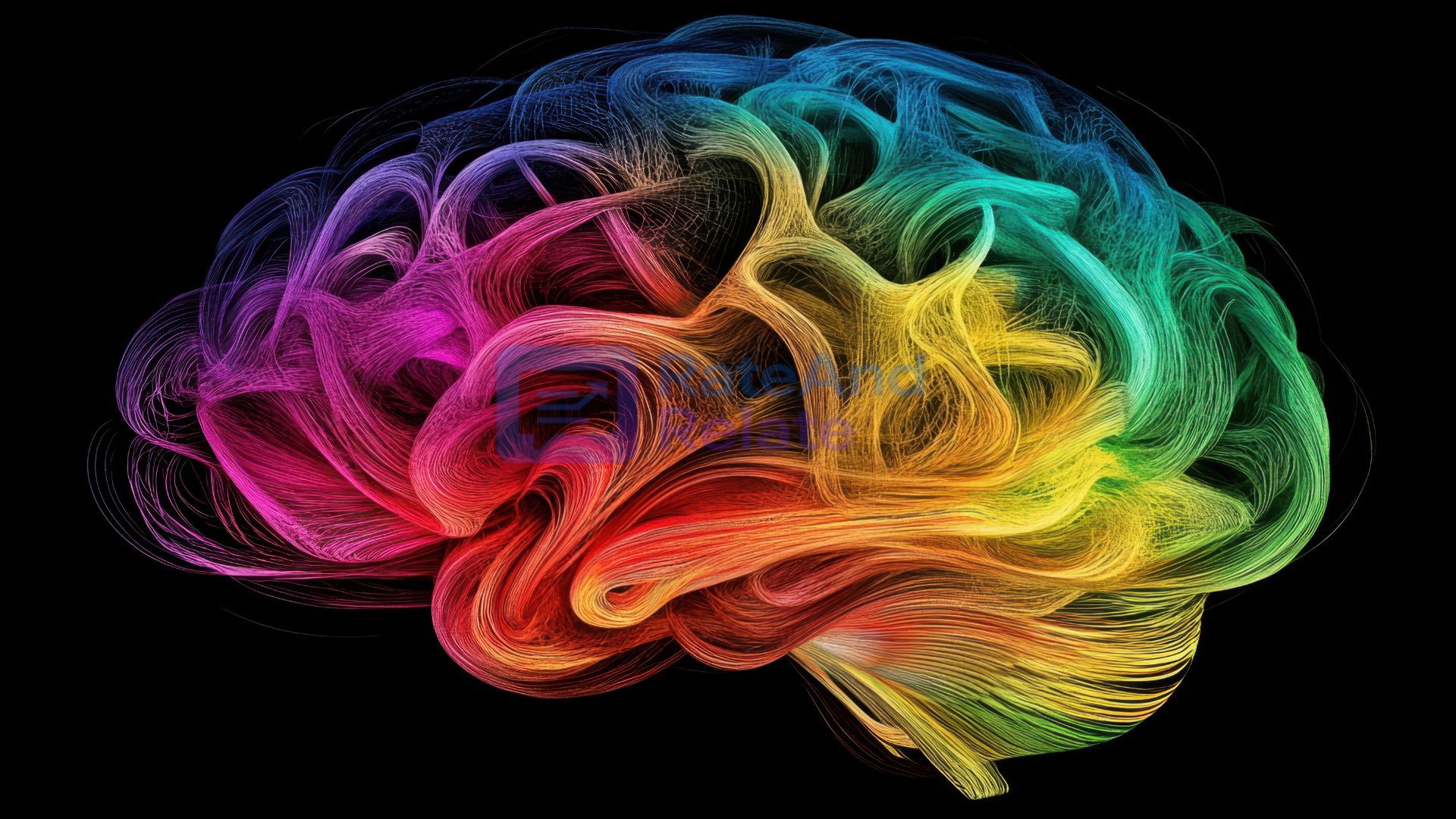
Neural art emerged from advances in deep learning — specifically, generative adversarial networks (GANs) and diffusion models.
- These systems learn by analyzing thousands of artworks, identifying patterns in color, composition, and texture.
- Then, they generate new images that are not copies, but novel combinations inspired by that data.
Famous examples include Google’s DeepDream, which visualizes neural processing in dreamlike swirls, and OpenAI’s DALL·E, capable of turning text prompts into vivid illustrations.
What’s revolutionary is that AI can now create on demand, translating imagination into image at the speed of thought.
2. Redefining Creativity
For centuries, creativity was tied to human emotion, intuition, and intention. Neural artists challenge this definition.
- Can a machine that doesn’t “feel” still be creative?
- If beauty arises from perception rather than intent, does authorship really matter?
In many ways, AI creativity reflects collaborative intelligence — humans provide vision, and algorithms execute it. Artists now act as curators or conductors, guiding neural models toward desired aesthetics. The line between artist and algorithm blurs, giving birth to a new form of hybrid art.
3. When Machines Make Millions
In 2018, an AI-generated portrait titled “Edmond de Belamy” was sold by Christie’s for $432,500 — a moment that shook the art world.
Since then, digital artworks created with AI have flooded NFT marketplaces, design studios, and galleries.
- Companies like RunwayML, Midjourney, and Stable Diffusion have democratized AI creativity.
- Artists use them to experiment with forms impossible through traditional tools.
However, this success also raises legal and ethical questions:
Who owns an AI-generated painting — the coder, the user, or the machine?
4. The Human Element in Machine Art
Even as algorithms generate art, they rely on human emotion and judgment. AI can produce infinite variations, but humans decide what moves us.
The role of the artist has shifted from “creator” to “collaborator with code.”
Musicians remix AI-generated melodies, designers use AI for inspiration, and filmmakers employ neural networks for storyboarding and visual effects.
Rather than replacing artists, neural systems may be expanding the canvas of human imagination — letting us visualize what once existed only in dreams.
5. The Debate: Art or Automation?
Critics argue that neural art lacks soul — that it mimics form without meaning.
But supporters see it differently: art has always evolved with technology — from the invention of the camera to digital animation. AI is simply the next tool, amplifying human creativity.
As philosopher Marshall McLuhan said, “Every new medium reshapes our sense of art.” Neural artists are doing just that — forcing us to rethink what it means to create, to feel, and to appreciate beauty in the age of algorithms.
Neural artists mark a turning point in cultural evolution. Machines can now compose, paint, and perform — but they still need humans to define purpose and meaning. The fusion of neural intelligence and human creativity is not the end of art — it’s a new Renaissance, one where pixels and code become brushstrokes of imagination.
The future of art won’t belong solely to humans or machines — it will belong to those who can dream in both languages.